
How to Care for an Olive Wood Cutting Board (and Is Olive Wood Good for Cutting Boards?)
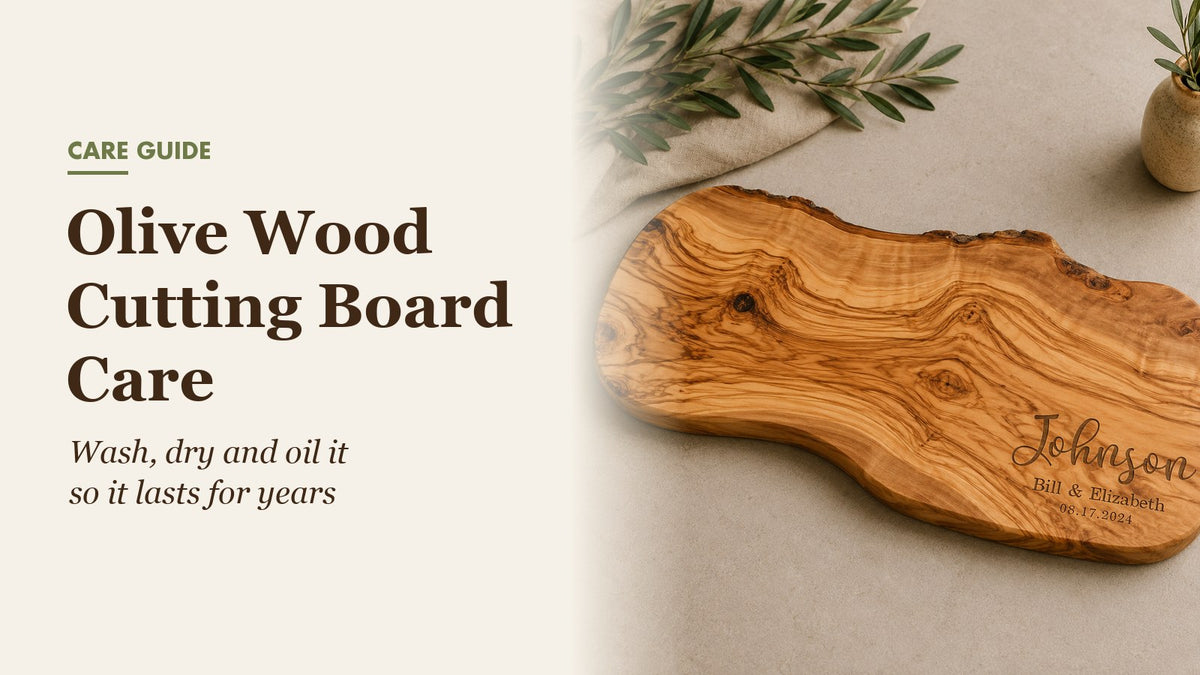
Have you been wondering…
- Is olive wood good for cutting boards?
- Olive wood or acacia: which cutting board is better?
- Is pecan wood good for cutting boards?
- Can I put an olive wood board in the dishwasher?
- How often should I oil it, and can I use olive oil?
- How do I care for olive wood spoons and utensils?
Tap a question to jump to the answer.
Olive wood makes an excellent cutting board: it is hard, dense and naturally oily. Caring for one is simple: wash it by hand with warm water and a little soap, dry it straight away standing on its edge, and rub in a beeswax and oil blend whenever the wood looks dry or pale. Never put it in the dishwasher and never leave it soaking.
After every use
- Scrape off food and rinse with warm water.
- Wash with a soft sponge and a little dish soap.
- Towel it dry, then stand it on its edge so both sides air-dry.
What to avoid
- The dishwasher. Heat and long soaking can crack and warp the wood.
- Soaking in the sink. Water gets into the grain and the board can split.
- Drying flat on a wet counter. One side stays damp and the board can warp.
Oiling and waxing
Olive wood is dense and naturally oily, but it still dries out with washing. When the surface looks pale or feels dry:
- Make sure the board is clean and completely dry.
- Rub a thin layer of a beeswax and oil blend over every face and edge with a soft cloth.
- Leave it for a few hours or overnight, then buff off what has not soaked in.
Our 4 oz beeswax blend is made for exactly this.
Engraved boards
Care is the same. Wipe the engraved area with the grain and do not scrub hard into the lettering.
Your questions, answered
Is olive wood good for cutting boards?
Yes. Olive wood is a hard, dense, close-grained wood with natural oils, so it stands up well to knives and does not soak up water the way softer woods do. Every board also has its own grain pattern.
Olive wood or acacia: which cutting board is better?
Both are good hardwood boards and are cared for the same way. Olive wood is denser and has the swirling grain people know it for; acacia costs a little less. Compare our olive wood boards (from $26.50) and acacia boards (from $24.99).
Is pecan wood good for cutting boards?
Pecan is a hard, closed-grain hardwood, so it can work well for a cutting board. The care on this page applies to any wooden board: hand wash, dry on edge and re-oil when dry.
Can I put an olive wood board in the dishwasher?
No. Hand wash only.
How often should I oil it, and can I use olive oil?
Whenever it looks dry: every week or two for the first month, then about monthly. Use a food-safe mineral oil or a beeswax and oil blend rather than cooking oils such as olive oil, which can go rancid in the wood over time.
How do I care for olive wood spoons and utensils?
The same way as a board: hand wash, dry straight away and rub in a little oil or wax when they look dry. See our olive wood spoon set with holder and olive wood utensil set.
The grain looks different from the photo. Is that normal?
Yes. Every olive wood board has its own grain, so no two are the same.